
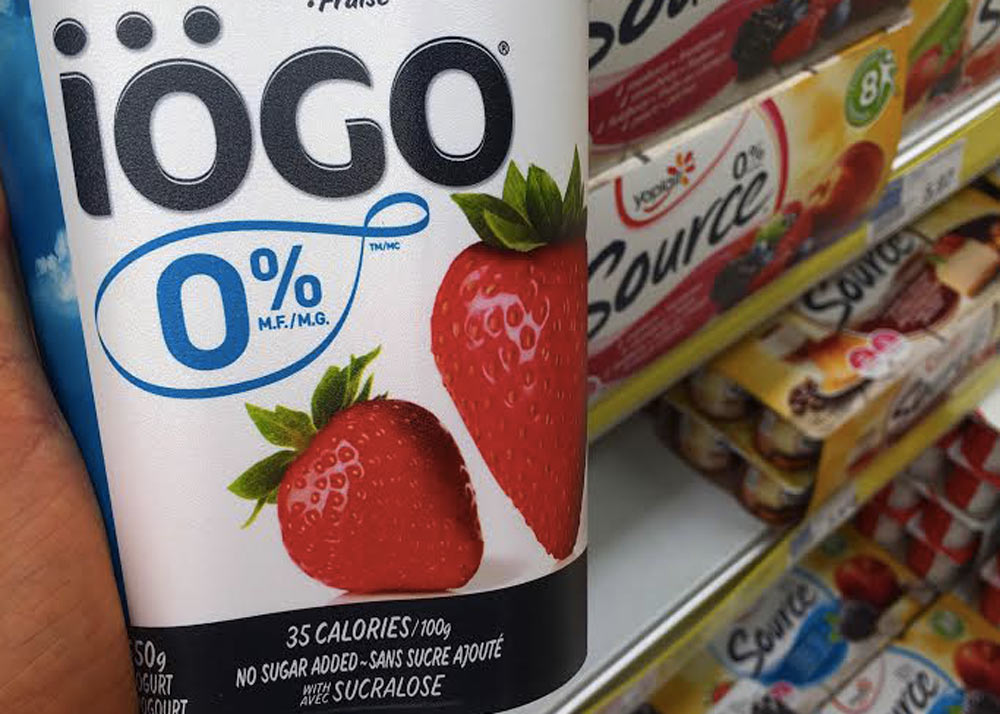
What is SUCRALOSE really hiding?
The question that always comes up in nutrition consultations is: "but what can I take to replace sugar?". There are several choices available to you in stores; some are horrible and others are much better. Here is a brief description of a very popular artificial sweetener used on the market, as well as its effects on the human body:
Sucralose (Splenda)
Sucralose is an artificial sweetener with a sweetening power approximately 500 to 600 times greater than sucrose (table sugar). It is synthesized chemically through the selective chlorination of sucrose. A major problem with Splenda is that it contains a covalent chlorine bond. This means that there will be no dissociation between the chlorine molecules and the sugar molecules in the body, unlike, for example, table salt, whose chlorine molecule easily dissociates when in contact with water. There are no chlorine bonds of this kind in nature. Examples of these synthetic covalent chlorine bonds include DDT (an insecticide banned in 1972), PCBs (polychlorinated biphenyl is a virtually non-flammable electrical insulator with excellent thermal conductivity. It is also a persistent pollutant that is extremely carcinogenic!), Agent Orange (a herbicide used during the Vietnam War that is highly carcinogenic), and, of course, Splenda!What do the studies say?

In 2006, there were only 15 studies demonstrating that Splenda (sucralose) was safe (in the short term), 13 of which were funded by companies producing Splenda. In that same year, there were only 6 ongoing studies on Splenda involving humans, and only 2 of them were completed before the FDA authorized the consumption of sucralose for the general public. These 2 studies, lasting 4 days, had a grand total of 36 subjects... and they were studying the relationship between sucralose and tooth decay! After acceptance by the FDA, no studies were conducted on children or pregnant women. A study published in 2009 in the Journal of Toxicology and Environmental Health (1) demonstrated that sucralose causes: A reduction of approximately 50% of good bacteria in the intestines An increase in intestinal pH Weight gain Affects a certain glycoprotein that could cause certain medications to be rejected Is it really zero calorie? In fact, sucralose begins as a sucrose molecule linked with 3 chlorine molecules. The chemical process to produce sucralose changes the molecule into fructo-galactose, a sugar that does not exist in nature. The body therefore has no enzymes to metabolize it. It is for this reason that McNeil Nutritionals (producer of Splenda) says there are no calories. In fact, it is because, according to them, the body cannot metabolize it, because in reality, the sucralose molecule does contain calories. Curiously, it seems that the body may absorb at least 15% of the sucralose and convert it into 1,6-dichlorofructose, a substance never studied in humans. To arrive at such an average, it is important to note that some people will metabolize much more than 15%. Therefore, some people could be more affected than others. Having more chemical similarity to a carcinogenic insecticide than to table sugar, I strongly advise you to avoid Splenda/sucralose. *For more information, I highly recommend buying the book "Sweet Deception" by Dr. Joseph Mercola.* Article written by Vincent Paradis - Osteopathy / Naturopathy
